
Quick takeaway 🩸
Eating sugar does not automatically cause diabetes, and one high glucose result does not tell the whole story.
Blood glucose gives a snapshot of glucose in your blood around the time of testing. HbA1c gives a longer-term picture of glucose exposure over roughly the previous 8 to 12 weeks. The useful information comes from interpreting the right test in the right clinical context.
Blood sugar is one of the most familiar health topics, but it is also one of the easiest to oversimplify. A sweet drink can raise glucose after you consume it, but that normal rise is not the same thing as having diabetes. Diabetes develops when glucose regulation is persistently impaired, and the reason differs between type 1, type 2, gestational diabetes and other forms.
In this guide, you will learn:
- what happens to glucose after you eat carbohydrates;
- how insulin helps regulate blood glucose;
- how a high-free-sugar diet can affect metabolic health;
- what fasting glucose, random glucose and HbA1c actually measure;
- how UK diagnostic thresholds are used; and
- which practical changes are supported by current health guidance.
Why Blood Glucose Matters
Glucose is an important fuel. Your brain and many other tissues depend on a steady supply, so your body continually works to keep blood glucose within a useful physiological range.
Problems arise when glucose remains too high for too long. Persistent hyperglycaemia can damage blood vessels and nerves and contributes to complications affecting organs such as the eyes, kidneys, heart and feet in people with diabetes. The aim is not to eliminate glucose from your body. It is to maintain effective glucose regulation.
What Happens When You Eat Carbohydrates?
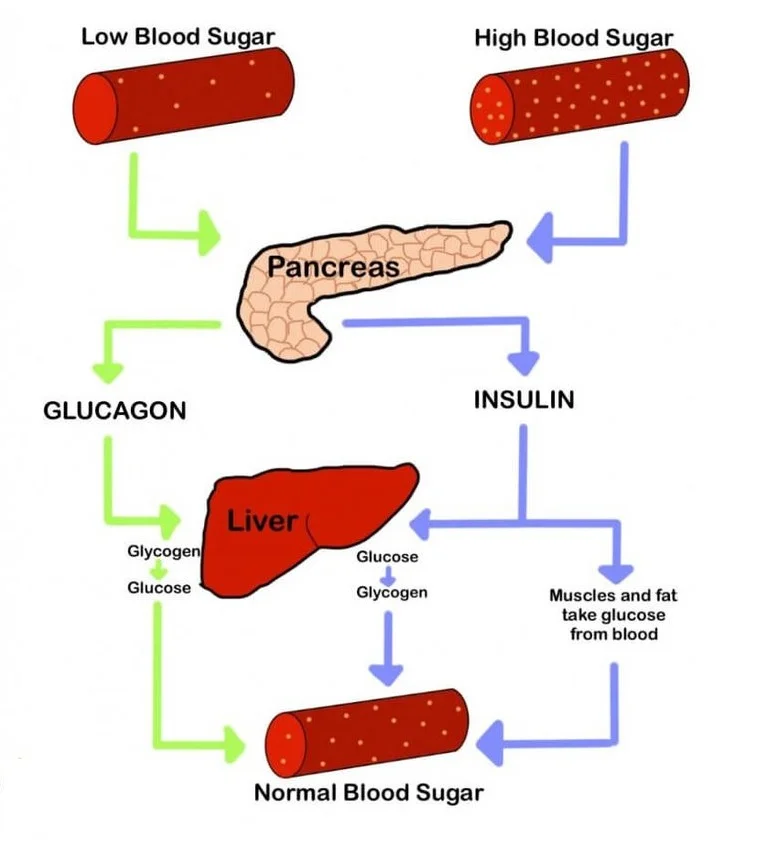
Many carbohydrates are broken down during digestion into glucose and other simple sugars. Glucose is absorbed into the bloodstream, causing blood glucose to rise. In response, beta cells in the pancreas release insulin.
Insulin acts as a metabolic signal. It helps tissues such as muscle and fat take up glucose and encourages the liver to store glucose as glycogen. As glucose is cleared from the circulation, blood glucose falls towards its usual range. When glucose is low, other hormones, including glucagon, help make more glucose available.
This balancing process is part of homeostasis. Blood glucose is meant to change after food. What matters clinically is whether the body can regulate those changes appropriately over time.
Does Eating Sugar Cause Diabetes?
Not in the simple way this is often presented online.
Type 1 diabetes is an autoimmune condition in which the insulin-producing beta cells of the pancreas are destroyed. Eating sugar does not cause type 1 diabetes.
Type 2 diabetes is multifactorial. Genetics, age, ethnicity, body composition, physical activity, sleep, some medicines and other health conditions can all affect risk. Diet is part of that picture. Diets high in free sugars can contribute excess energy, particularly when sugary drinks are consumed frequently, and excess weight is an important modifiable risk factor for type 2 diabetes.
The scientifically useful message is therefore not that one ingredient directly causes every case of type 2 diabetes. It is that habitual dietary patterns can influence metabolic risk, and blood tests can help identify when glucose regulation is becoming impaired.
Free Sugar Is Not the Same as All Sugar
The NHS uses the term free sugars for sugars added to foods and drinks as well as sugars naturally present in honey, syrups, unsweetened fruit juices, vegetable juices and smoothies. The sugars naturally contained within whole fruit, vegetables and milk are not treated in the same way.
Current NHS guidance says adults should have no more than 30 g of free sugars per day, roughly equivalent to 7 sugar cubes. A single can of some sugary soft drinks can exceed that amount.
🔍 Blood-test insight: A person’s diet cannot be reconstructed from a single glucose result. Glucose and HbA1c are useful biomarkers, but they have to be interpreted alongside the type of test, symptoms, medicines and clinical history.
🧪 The Blood Tests Used to Assess Glucose
1. Fasting Plasma Glucose
A fasting plasma glucose test measures glucose after a period without food. In UK guidance, a fasting plasma glucose of 7.0 mmol/L or above falls within the diagnostic range for diabetes. In an adult without symptoms, an abnormal result generally needs confirmation with a second diagnostic test.
NICE describes fasting plasma glucose from 5.5 to 6.9 mmol/L as a high-risk range in people being assessed for type 2 diabetes risk. This is not the same as saying everyone in that range has diabetes.
2. HbA1c
HbA1c measures glycated haemoglobin. Glucose in the blood attaches to haemoglobin inside red blood cells, so the amount of glycated haemoglobin reflects average glucose exposure over roughly the previous 8 to 12 weeks.
| HbA1c result | How it is used in UK type 2 diabetes assessment |
|---|---|
| Below 42 mmol/mol | Below the NICE high-risk range, although overall risk still depends on the person. |
| 42 to 47 mmol/mol | High risk of type 2 diabetes, often called non-diabetic hyperglycaemia. |
| 48 mmol/mol or above | Falls within the diagnostic range for diabetes. Confirmation is usually required if there are no symptoms. |
HbA1c is extremely useful, but it is not appropriate in every situation. Conditions that alter red-cell lifespan, some haemoglobin variants, pregnancy and certain other clinical situations can affect interpretation. In those cases, clinicians may use alternative glucose tests.
3. Random Plasma Glucose
A random glucose sample can be taken without fasting. A random venous plasma glucose of 11.1 mmol/L or above can support a diagnosis of diabetes when interpreted with the clinical picture, especially when classic symptoms are present.
There is not a standard UK ‘prediabetes range’ for random glucose in the same way there is for HbA1c. This is an important correction to a common internet simplification.
4. Oral Glucose Tolerance Test
An oral glucose tolerance test measures how the body handles a standard glucose load. Blood is tested before and after the glucose drink. It is useful in selected situations, including when other results do not fully answer the clinical question.
5. Fructosamine
Fructosamine reflects glycation of circulating proteins and represents a shorter period of glucose exposure than HbA1c. It is not a routine screening test for diabetes. It can be useful in selected situations where HbA1c is difficult to interpret.
Read the Pattern, Not Just the Number
A laboratory result is not a diagnosis in isolation. Consider three examples:
- Raised HbA1c plus repeatedly raised fasting glucose: the results point in the same direction and warrant clinical assessment for diabetes.
- Normal HbA1c with one mildly raised random glucose: timing, recent food intake, illness and other factors matter before conclusions are drawn.
- HbA1c that does not match home glucose readings: the clinician may consider whether a red-cell or haemoglobin-related factor is affecting HbA1c interpretation.
How a High-Free-Sugar Diet Can Affect Health
Foods high in free sugar are often easy to consume quickly and may provide substantial energy without much fibre or satiety. Sugar-sweetened drinks are a particularly important source because liquid calories can be consumed rapidly.
A high intake of free sugars can contribute to tooth decay and excess calorie intake. Over time, dietary patterns that promote weight gain can increase the risk of insulin resistance and type 2 diabetes in susceptible people. High free-sugar intake can also contribute to raised triglycerides in some dietary patterns.
That does not mean every rise in glucose after eating is harmful. A post-meal rise is expected physiology. The concern is persistent dysregulation, not the existence of glucose itself.
Practical Ways to Support Healthier Glucose Regulation
- Start with drinks: replacing sugar-sweetened drinks with water or unsweetened alternatives can make a large difference to free-sugar intake.
- Choose higher-fibre carbohydrates: wholegrains, pulses, vegetables and intact fruit generally produce a different metabolic response from highly refined carbohydrate foods.
- Combine foods: protein, fibre and fat can change how quickly a mixed meal is digested.
- Be physically active: regular activity improves insulin sensitivity and is a core part of type 2 diabetes prevention and management.
- Use food labels: the NHS traffic-light labelling system can help identify products high in total sugars, while ingredient lists help identify sources of free sugar.
- Do not self-test compulsively: routine glucose monitoring is not necessary for every healthy person. Testing should answer a useful clinical question.
⚠️ When Should You Seek Medical Advice?
Speak with a healthcare professional if you have persistent excessive thirst, frequent urination, unexplained weight loss, recurrent infections, significant fatigue, blurred vision, or a blood result in the high-risk or diabetic range.
Symptoms such as severe dehydration, vomiting, abdominal pain, deep or rapid breathing, marked drowsiness or confusion can occur in serious hyperglycaemic emergencies and need urgent medical assessment.
🚦 Haem Philes Traffic-Light Takeaways
🟢 GREEN: Good moves
- Keep free sugars within current NHS guidance and pay particular attention to sugary drinks.
- Use HbA1c and glucose results for the questions they are designed to answer.
- Build meals around fibre-rich carbohydrates, vegetables, protein and unsaturated fats.
- Stay physically active and address modifiable diabetes risk factors.
🟠 AMBER: Watch, interpret and get advice
- HbA1c from 42 to 47 mmol/mol indicates high risk and deserves follow-up.
- A result that does not fit your symptoms or other glucose measurements needs context.
- Persistent thirst, frequent urination or unexplained weight loss should be assessed.
🔴 RED: Definite no’s
- Do not assume one sugary meal means you have diabetes.
- Do not label a random glucose result as ‘prediabetes’ using fasting thresholds.
- Do not assume type 1 diabetes is caused by eating sugar.
- Do not ignore severe symptoms of marked hyperglycaemia.
Frequently Asked Questions
Is HbA1c the same as blood glucose?
No. Blood glucose is a snapshot around the time the sample is taken. HbA1c reflects average glucose exposure across several weeks.
Can I have diabetes with no symptoms?
Yes. Type 2 diabetes can be present before obvious symptoms develop, which is why risk-based testing is useful.
Does fruit count towards the 30 g free-sugar limit?
The sugar contained within whole fruit does not count as free sugar. Sugars released when fruit is juiced, pureed or blended can count as free sugars.
Should everybody monitor their blood glucose at home?
No. Home monitoring is essential for some people with diabetes, but the type and frequency of monitoring should match the person’s treatment and clinical needs.
🔬 A Blood Scientist’s Perspective
Glucose testing is a good example of why the circumstances around a sample matter. A fasting glucose, a random glucose and an HbA1c are not interchangeable results. They answer related but different questions.
A laboratory number also has to be interpreted with the biology behind it. HbA1c depends on red blood cells, while plasma glucose does not. That is why a clinician may choose a different test when red-cell turnover or haemoglobin biology could make HbA1c misleading.
The goal is not to fear every glucose rise. It is to understand whether your overall pattern suggests healthy regulation, increased risk or established disease.
Related Haem Philes Reading
- Learn how omega-3 intake relates to your blood lipid profile.
- Browse more evidence-based explainers in our Diet & Nutrition section.
Sources and Further Reading
- NHS: Sugar, the facts.
- NICE: Type 2 diabetes prevention in people at high risk.
- NICE: Type 2 diabetes in adults, blood glucose management.
- NHS: Diabetes.
About this article: Haem Philes is led by an HCPC-registered Specialist Biomedical Scientist with professional laboratory experience in haematology. Content is written for public health education and reviewed against authoritative clinical and laboratory sources.
Last reviewed: September 2026.
This article is for health education and does not replace individual medical advice, diagnosis or treatment. If you are concerned about symptoms or abnormal blood-test results, speak with an appropriately qualified healthcare professional.